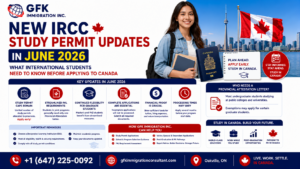
New IRCC Study Permit Updates in June 2026: What International Students Need to Know Before Applying to Canada
Canada remains one of the world’s leading destinations for international students, but recent updates from Immigration, Refugees and Citizenship Canada (IRCC) are changing how study permit applications are processed in 2026.
From study permit caps and Provincial Attestation Letter (PAL) requirements to processing timelines and eligibility rules, prospective students must stay informed to avoid delays and improve their chances of approval.
At GFK Immigration Inc., we help students and families navigate Canada’s evolving immigration landscape. As a licensed Canadian immigration consultancy, we closely monitor IRCC policy changes to ensure our clients make informed decisions about studying in Canada.
This guide explains the latest IRCC study permit updates in June 2026 and what they mean for future international students.
Why Is Canada Updating Study Permit Rules?
Canada continues to manage record demand from international students while balancing housing availability, educational capacity, and immigration objectives.
To improve system integrity and ensure sustainable growth, IRCC has introduced measures that affect:
- Study permit application volumes
- Provincial Attestation Letter requirements
- Processing priorities
- Financial eligibility requirements
- Student compliance obligations
These changes are intended to create a more predictable and manageable international student system.
Key Study Permit Updates in June 2026
1. Study Permit Caps Remain in Effect
Canada continues to limit the number of study permits issued under its international student cap framework.
For 2026, IRCC has allocated study permit quotas to provinces and territories, with approximately 180,000 permits expected to be issued to applicants who require Provincial or Territorial Attestation Letters (PALs/TALs).
This means students should apply as early as possible because provincial allocations may be reached before the end of the year.
2. Simplified PAL Requirements for Joint Programs
One of the most student-friendly changes involves applicants enrolled in joint academic programs.
Under updated processing instructions, students studying in programs involving multiple institutions or provinces generally need only one Provincial Attestation Letter rather than multiple documents. This simplifies the application process and reduces administrative barriers.
3. Graduate Students Continue to Receive Additional Flexibility
Canada remains committed to attracting highly skilled talent through master’s and doctoral programs.
Graduate-level students continue to benefit from streamlined processing measures and exemptions in certain study permit requirements, helping Canada remain competitive in global education recruitment.
4. Increased Focus on Complete Applications
IRCC has reiterated that incomplete applications will not be processed until all required documents are received.
Missing documents remain one of the leading causes of study permit delays and refusals. Students should ensure they submit:
- Letter of Acceptance (LOA)
- Provincial Attestation Letter (if required)
- Financial proof
- Passport documents
- Biometrics
- Medical examination records (if applicable)
Submitting a complete application from the beginning can significantly reduce processing delays.
5. Financial Proof Requirements Remain a Critical Factor
IRCC continues to place significant emphasis on applicants’ ability to financially support themselves while studying in Canada.
Students must demonstrate sufficient funds to cover:
- Tuition fees
- Living expenses
- Return transportation costs
- Expenses for accompanying family members
Failure to provide adequate financial evidence remains a common reason for study permit refusals.
Processing Times: What Students Should Expect
Study permit processing times continue to vary depending on the applicant’s country of residence and overall application volume.
Recent updates indicate that some international applicants may experience longer wait times due to increased demand and enhanced document verification procedures. Applicants are strongly encouraged to apply several months before their intended program start date.
Eligibility Requirements Remain Strict
To qualify for a Canadian study permit, applicants must generally:
- Obtain admission from a Designated Learning Institution (DLI)
- Demonstrate sufficient financial resources
- Meet health and security requirements
- Convince immigration officers they will comply with permit conditions
- Maintain academic progress while studying
Students must also continue meeting all study permit conditions after arriving in Canada.
Common Mistakes That Lead to Study Permit Refusals
Many study permit refusals are avoidable.
The most common issues include:
Insufficient Financial Documentation
Applicants often underestimate the amount of proof required to demonstrate financial capacity.
Weak Study Plans
A poorly explained academic pathway may raise concerns about the purpose of study.
Incomplete Applications
Missing documents frequently cause delays and refusals.
Applying Too Late
Waiting until the last minute may result in missed intake deadlines.
Choosing Non-Compliant Institutions
Students should verify that their chosen institution is a recognized Designated Learning Institution.
Frequently Asked Questions
Are study permits harder to obtain in 2026?
Study permits remain available to qualified applicants. However, increased scrutiny and permit caps make proper preparation more important than ever.
Do I still need a Provincial Attestation Letter?
Many applicants do. Eligibility depends on the type of program and educational institution. Some graduate-level students may benefit from exemptions or modified requirements.
How early should I apply?
Students should ideally begin preparing several months before their intended intake date to allow sufficient time for document collection, biometrics, and processing.
Can I work while studying in Canada?
Many international students may work under the conditions outlined on their study permit. Students must comply with all employment and study requirements associated with their permit.
How GFK Immigration Inc. Can Help
Applying for a Canadian study permit involves more than simply obtaining a school admission letter.
At GFK Immigration Inc., we assist students and families with:
- Study permit applications
- School and program selection guidance
- PAL requirement assessments
- Visitor visa applications
- Spousal and dependent applications
- Post-graduation immigration planning
- Permanent residence pathways
Our team stays current with IRCC policy updates to help clients maximize their chances of success.
Final Thoughts
Canada remains one of the most attractive destinations for international education, but study permit rules continue to evolve in response to growing demand.
The June 2026 IRCC updates reinforce the importance of applying early, submitting complete documentation, and understanding current eligibility requirements.
For students planning to begin their Canadian education journey, preparation and professional guidance can make a significant difference in achieving a successful outcome.
Need Help Applying for a Canadian Study Permit?
GFK Immigration Inc.
📞 +1 (647) 225-0092
🌐 gfkimmigrationconsultant.com
📍 Oakville, Ontario, Canada
Disclaimer
This article is intended for educational and informational purposes only and does not constitute legal or immigration advice. Immigration policies, study permit requirements, processing times, and eligibility criteria may change without notice. Individuals should consult official Government of Canada resources or seek advice from a licensed Canadian immigration professional regarding their specific circumstances.