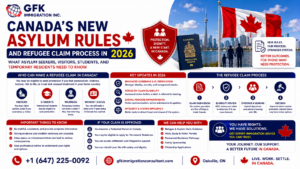
Canada’s New Asylum Rules and Refugee Claim Process in 2026: What Asylum Seekers, Visitors, Students, and Temporary Residents Need to Know
Canada has long been recognized as a country that offers protection to individuals fleeing persecution, violence, war, and human rights violations. However, with refugee claim volumes reaching record levels in recent years, the Canadian government continues to introduce measures aimed at improving the efficiency, integrity, and fairness of its asylum system.
In 2026, several updates to Canada’s asylum and refugee claim process have attracted significant attention among visitors, international students, temporary foreign workers, and individuals considering seeking protection in Canada.
At GFK Immigration Inc., we believe it is essential to separate facts from misinformation. This guide explains Canada’s current asylum rules, recent process updates, eligibility requirements, and what prospective claimants should understand before pursuing a refugee claim.
What Is an Asylum Claim in Canada?
An asylum claim, also known as a refugee claim, is a request for protection made by an individual who fears persecution, torture, risk to life, or cruel and unusual treatment in their home country.
Canada assesses refugee claims under both:
- The 1951 United Nations Refugee Convention
- Canadian immigration and refugee protection laws
Individuals who qualify may receive protected person status and eventually become eligible to apply for permanent residence.
Why Is Canada Updating Its Asylum System?
Canada has experienced a significant increase in refugee claims over the past several years.
This growth has created challenges such as:
- Larger case inventories
- Longer processing times
- Increased demands on housing and settlement services
- Higher administrative workloads for immigration authorities
The government’s objective is not to eliminate refugee protection but to improve efficiency while ensuring that legitimate claims receive timely and fair consideration.
Key Changes and Developments in Canada’s Asylum Process in 2026
Canadas New Asylum Rules and Refugee Claim Process
Several operational and policy adjustments have influenced the refugee claim process.
Enhanced Screening and Verification
Canadian authorities continue strengthening identity verification and security screening procedures.
Applicants may face more detailed reviews regarding:
- Identity documentation
- Travel history
- Previous visa applications
- Criminality and security checks
- Prior refugee claims in other countries
Providing accurate and truthful information remains essential throughout the process.
Greater Focus on Claim Eligibility
Before a refugee claim proceeds to a hearing, officials first determine whether the claim is eligible for referral to the refugee determination process.
Factors that may affect eligibility include:
- Existing refugee protection in another country
- Previous refugee claims in Canada
- Serious criminal inadmissibility
- Certain international agreements affecting refugee processing
Each case is assessed individually.
Digital Processing Improvements
Immigration authorities continue expanding digital systems to improve case management and reduce administrative delays.
Many applicants now experience:
- Increased online communication
- Electronic document submissions
- Digital case updates
- Improved tracking capabilities
These improvements are intended to support faster processing and better transparency.
Who Can Apply for Asylum in Canada?
Canadas New Asylum Rules and Refugee Claim Process
Individuals may seek refugee protection if they can demonstrate a well-founded fear of persecution based on factors such as:
- Race
- Religion
- Nationality
- Political opinion
- Membership in a particular social group
They may also qualify if returning to their home country would expose them to:
- Serious harm
- Torture
- Risk to life
- Cruel or unusual punishment
Every refugee claim is assessed on its individual merits and supporting evidence.
Can Visitors, Students, and Workers Make Refugee Claims?
In some circumstances, yes.
Individuals who entered Canada as:
- Visitors
- International students
- Temporary foreign workers
may be eligible to make a refugee claim if they genuinely require protection and meet Canada’s legal requirements.
However, having a valid temporary status does not automatically guarantee eligibility or approval of a refugee claim.
Each application undergoes independent review.
What Happens After Filing a Refugee Claim?
The refugee claim process generally involves several stages.
Initial Eligibility Assessment
Immigration officials determine whether the claim can proceed under Canadian law.
Documentation and Evidence Submission
Applicants must provide evidence supporting their need for protection.
Examples may include:
- Identity documents
- Country condition reports
- Police reports
- Medical records
- Witness statements
- Human rights documentation
Refugee Hearing
Most eligible claims proceed to a hearing before the Refugee Protection Division (RPD) of the Immigration and Refugee Board (IRB).
During the hearing, decision-makers evaluate:
- Credibility
- Evidence
- Country conditions
- Legal eligibility for protection
Final Decision
If approved, the claimant may receive protected person status and later apply for permanent residence.
If refused, certain review or appeal options may be available depending on the circumstances.
Common Reasons Refugee Claims Are Refused
Canadas New Asylum Rules and Refugee Claim Process
Not all claims meet Canada’s legal requirements.
Common reasons for refusal include:
Insufficient Evidence
Claims must be supported by credible evidence whenever possible.
Credibility Concerns
Inconsistent information can affect the outcome of a case.
Alternative Protection Available
Some individuals may have access to protection in another country.
Failure to Meet Legal Refugee Definitions
Not all difficult personal situations qualify under refugee protection laws.
Because every case is unique, professional guidance can be valuable when assessing eligibility.
How Long Does the Asylum Process Take in 2026?
Processing times vary significantly depending on:
- Claim complexity
- Case volumes
- Security screening requirements
- Hearing scheduling availability
- Documentation completeness
Canada continues working to reduce refugee processing inventories, but timelines can still vary considerably from case to case.
Applicants should avoid relying on unofficial estimates and instead monitor updates through official government channels.
Frequently Asked Questions
Can I apply for asylum after arriving in Canada as a visitor?
Potentially. Eligibility depends on your specific circumstances and whether you meet Canada’s refugee protection requirements.
Does claiming asylum guarantee permanent residence?
No. Refugee claims must first be approved before an individual may become eligible for permanent residence through the protected person pathway.
Can international students claim asylum?
In certain situations, yes. However, each case must satisfy Canada’s refugee protection criteria.
What evidence is required for a refugee claim?
Evidence varies by case but may include identity documents, country-condition information, police reports, medical records, and supporting testimony.
Is Canada’s asylum system changing in 2026?
Canada continues implementing operational improvements, enhanced screening procedures, and digital modernization efforts to improve efficiency and system integrity.
Important Considerations Before Making a Refugee Claim
Canadas New Asylum Rules and Refugee Claim Process
Seeking refugee protection is a serious legal process.
Individuals should ensure they:
- Understand the eligibility requirements
- Provide truthful information
- Gather supporting documentation
- Seek qualified professional guidance when appropriate
- Avoid misinformation circulating on social media or unofficial sources
Refugee protection exists for individuals who genuinely require safety and protection under Canadian and international law.
How GFK Immigration Inc. Can Help
Understanding Canada’s immigration and protection systems can be complex.
At GFK Immigration Inc., our team assists eligible clients with:
- Immigration status assessments
- Refugee and protection pathway information
- Work permits
- Study permits
- Visitor visas
- Permanent residence applications
- Family sponsorship programs
- Citizenship applications
We provide professional guidance based on current Canadian immigration laws and policies.
Final Thoughts
Canadas New Asylum Rules and Refugee Claim Process
Canada remains committed to providing protection to individuals who genuinely face persecution, violence, or serious risks in their home countries. At the same time, the government continues strengthening screening procedures and modernizing the asylum system to ensure fairness, efficiency, and integrity.
For anyone considering a refugee claim, understanding the process, eligibility requirements, and documentation expectations is critical. Proper preparation and reliable guidance can make a significant difference when navigating Canada’s asylum system.
Need Immigration Guidance?
GFK Immigration Inc.
📞 +1 (647) 225-0092
🌐 gfkimmigrationconsultant.com
📍 Oakville, Ontario, Canada
Disclaimer
This article is provided for educational and informational purposes only and does not constitute legal advice or immigration advice. Refugee and asylum claims are highly fact-specific, and eligibility depends on individual circumstances. Applicants should consult official Government of Canada resources or a licensed Canadian immigration professional regarding their situation.
#CanadaAsylum #RefugeeClaimCanada #CanadaImmigration #AsylumProcess #RefugeeProtection #IRCC #ImmigrateToCanada #InternationalStudentsCanada #WorkPermitCanada #VisitorVisaCanada #Canada2026 #ImmigrationNews #GFKImmigration