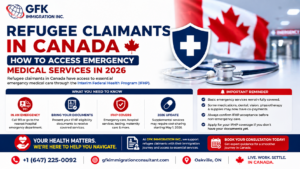
How Refugee Claimants in Canada Can Access Emergency Medical Services in 2026
Seeking asylum in Canada comes with many challenges, and navigating the healthcare system can feel overwhelming—especially during a medical emergency. The good news is that refugee claimants in Canada continue to have access to essential emergency healthcare through the Interim Federal Health Program (IFHP).
If you or a loved one needs urgent medical attention, understanding your rights and knowing what steps to take can make all the difference.
Can Refugee Claimants Receive Emergency Medical Care in Canada?
Yes. Refugee claimants in Canada are eligible for emergency medical care, even before they qualify for provincial health insurance. This coverage is provided through the Interim Federal Health Program, commonly known as IFHP.
The IFHP offers temporary health insurance to eligible refugee claimants, protected persons, and certain other groups. It covers medically necessary services, including emergency hospital visits, urgent physician care, diagnostic tests, and other essential treatments.
What to Do in a Medical Emergency
If you are experiencing a serious illness or injury, call 911 immediately or go to the nearest hospital emergency department. In Canada, emergency rooms are required to assess and stabilize anyone facing a medical emergency.
For urgent but non-life-threatening issues, you may also visit an urgent care centre or a walk-in clinic that accepts IFHP coverage.
Documents You Must Bring
To receive IFHP-covered medical services, you should present one of the following documents at the hospital, clinic, or healthcare facility:
- Acknowledgement of Claim and Notice to Return for Interview Letter (AoC)
- Refugee Protection Claimant Document (RPCD)
- Refugee Protection Identity Document (RPID)
- Interim Federal Health Certificate (IFHC), if applicable
These documents confirm your eligibility under the IFHP. Without proof of coverage, you may be asked to pay for services upfront.
How the Billing Process Works
If the healthcare provider is registered with Medavie Blue Cross, they can bill the IFHP directly for covered services. This means you should not have to pay out of pocket for eligible emergency medical care.
Before your appointment or treatment, it’s a good idea to confirm that the clinic, hospital, or specialist accepts IFHP coverage.
You can also use the Medavie Blue Cross provider search tool to find participating healthcare providers across Canada.
What Is Covered Under IFHP?
Basic IFHP coverage includes:
- Emergency room visits
- Physician and hospital services
- Laboratory and diagnostic testing
- Maternity and prenatal care
- Mental health services when medically necessary
- Treatment for urgent or acute medical conditions
These core medical services remain fully covered in 2026.
Important 2026 Update: Changes to Supplemental Benefits
Beginning May 1, 2026, changes to IFHP supplemental coverage have taken effect. While basic healthcare services remain fully covered, some supplemental services now require cost-sharing.
This may include:
- Prescription medications (small co-payment)
- Dental services
- Vision care
- Physiotherapy
- Psychological counselling
- Medical devices and supplies
Refugee claimants may now be responsible for a portion of these supplemental healthcare costs.
What If You Don’t Have IFHP Documents Yet?
If you have already made a refugee claim but have not yet received your IFHP eligibility documents, you may need to apply for an Interim Federal Health Certificate.
Applications can be submitted online through your IRCC secure account or by mail using Form IMM 5564.
Key Tips for Refugee Claimants
- Always carry your IFHP eligibility documents with you.
- Confirm that your healthcare provider accepts IFHP before receiving non-emergency care.
- Keep copies of all medical records and receipts.
- Seek medical attention immediately in emergencies—do not delay care.
How GFK Immigration Inc. Can Help
Understanding healthcare access as a refugee claimant is an important part of settling successfully in Canada. At GFK Immigration Inc., we help refugee claimants and newcomers navigate every stage of their Canadian journey—from immigration applications to accessing essential services like healthcare.
If you have questions about your refugee claim, IFHP eligibility, or your settlement options in Canada, our team is here to guide you.
Need professional immigration support? Contact GFK Immigration Inc. today.
#GFKImmigration #RefugeeClaimantsCanada #IFHP #CanadaHealthcare #RefugeeSupport #ImmigrationCanada #NewcomersToCanada #RefugeeHealthcare #CanadaImmigration #EmergencyMedicalCare #RefugeeRights #SettleInCanada #LifeInCanada #OakvilleImmigration #ImmigrationConsultant #CanadianImmigration #HealthcareInCanada #RefugeeAssistance #GFKImmigrationInc #LiveWorkSettleInCanada