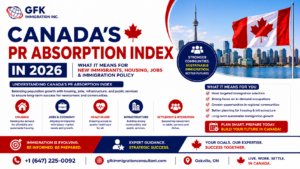
Canada’s PR Absorption Index in 2026: What It Means for New Immigrants, Housing, Jobs & Immigration Policy
Canada’s immigration system continues to evolve rapidly in 2026, and one topic now shaping national discussions is the country’s growing focus on “PR absorption capacity” — the ability of provinces, cities, and communities to successfully support and integrate new permanent residents.
As Immigration, Refugees and Citizenship Canada (IRCC) adjusts immigration targets and provinces respond to housing and labour pressures, understanding Canada’s PR absorption index has become increasingly important for immigrants, temporary residents, employers, and international students planning their future in Canada.
At GFK Immigration Inc., we closely monitor immigration policy trends and their real-world impact on applicants. The discussion around Canada’s immigration absorption capacity is no longer theoretical — it is now directly influencing Express Entry draws, Provincial Nominee Program (PNP) priorities, housing strategies, and labour market planning across the country.
What Is Canada’s PR Absorption Index?
The “PR Absorption Index” refers to Canada’s ability to successfully absorb and support new permanent residents into the economy and society.
This includes factors such as:
- Housing availability
- Healthcare access
- Employment opportunities
- Infrastructure capacity
- Public services
- Settlement support
- Regional labour shortages
- Cost of living pressures
In simple terms, the federal and provincial governments are asking:
“Can communities realistically support the number of newcomers arriving each year?”
This issue has become central to immigration planning in 2026 as Canada balances economic immigration goals with growing public concerns about affordability and infrastructure strain.
Why Canada Is Reassessing Immigration Capacity in 2026
Over the past few years, Canada welcomed record-breaking levels of immigration to address:
- Labour shortages
- Aging population concerns
- Economic recovery needs
- Skilled worker demand
However, rapid population growth has also increased pressure on:
- Housing markets
- Rental affordability
- Healthcare systems
- Transit infrastructure
- Public services
As a result, federal and provincial governments are increasingly linking immigration levels to local absorption capacity.
This shift is already influencing:
- Provincial nomination allocations
- International student policies
- Temporary resident caps
- Express Entry category-based draws
- Regional immigration priorities
How the PR Absorption Index May Affect Immigration Applicants
For future immigrants, the PR absorption conversation matters because it could shape:
1. Express Entry Selection Trends
IRCC is increasingly prioritizing applicants who can help fill targeted labour shortages in sectors such as:
- Healthcare
- Skilled trades
- Construction
- Education
- Technology
- Francophone communities
Category-based Express Entry draws are expected to continue playing a major role in aligning immigration with Canada’s economic capacity.
2. Greater Focus on Regional Immigration
Large urban centres such as:
- Toronto
- Vancouver
- Montreal
continue to face housing affordability challenges.
As a result, provinces are encouraging newcomers to settle in:
- Smaller cities
- Rural communities
- Regional economic hubs
Programs such as:
- Rural Community Immigration Pilot (RCIP)
- Atlantic Immigration Program (AIP)
- Provincial Nominee Programs (PNPs)
may continue expanding in importance throughout 2026.
3. Provincial Nominee Program Priorities
Several provinces have already adjusted immigration priorities to align with labour shortages and infrastructure realities.
For example:
- British Columbia now prioritizes “Care, Build, and Innovate” occupations.
- Ontario continues targeting healthcare and skilled trade workers.
- Atlantic provinces are focusing on long-term workforce retention.
Applicants whose occupations align with priority sectors may continue seeing stronger immigration opportunities.
Housing and Immigration: A Major National Concern
One of the biggest drivers behind the PR absorption discussion is housing.
Canada’s growing population has increased demand for:
- Rental units
- Affordable housing
- Student accommodations
- Urban infrastructure
Federal leaders have repeatedly stated that immigration policy must now work alongside housing development plans.
This does not mean Canada is closing immigration pathways.
Instead, the government appears focused on:
- More strategic immigration selection
- Better regional distribution
- Sustainable population growth
- Labour-market-driven immigration policies
What This Means for International Students
International students are also being affected by Canada’s evolving immigration strategy.
Recent changes include:
- International student caps
- Increased financial requirements
- Greater scrutiny of institutions
- Stronger focus on labour-market outcomes
Students choosing programs aligned with in-demand occupations may have stronger long-term immigration prospects after graduation.
Canada Still Needs Immigrants
Canada’s PR Absorption Index in 2026
Despite discussions about absorption capacity, Canada continues to face major labour shortages across critical sectors.
The country still relies heavily on immigration to support:
- Economic growth
- Healthcare systems
- Construction projects
- Aging workforce replacement
- Innovation and entrepreneurship
In fact, many experts believe Canada’s long-term immigration needs remain strong — but future policies will likely become more targeted and strategic.
High-Demand Occupations Likely to Benefit in 2026
Applicants working in the following sectors may continue to benefit from priority immigration pathways:
Healthcare
- Nurses
- Physicians
- Care aides
- Pharmacists
- Therapists
Skilled Trades
- Electricians
- Welders
- Carpenters
- Plumbers
- HVAC technicians
Construction & Infrastructure
- Project managers
- Heavy equipment operators
- Engineers
Technology
- Software developers
- Cybersecurity professionals
- AI specialists
Education & Childcare
- Early childhood educators
- Teachers
How Applicants Can Strengthen Their Immigration Strategy
As Canada moves toward more strategic immigration selection, applicants should focus on strengthening their profiles.
Recommended strategies include:
Improve Language Scores
Higher English or French scores remain one of the strongest ways to improve CRS rankings.
Target Provincial Programs
Provincial pathways may offer faster opportunities for eligible candidates.
Consider Regional Communities
Smaller provinces and regional areas may provide better immigration opportunities.
Gain Canadian Work Experience
Canadian employment can significantly improve immigration competitiveness.
Align with Priority Occupations
Candidates in healthcare, trades, construction, and education sectors may benefit most.
Expert Guidance From GFK Immigration Inc.
At GFK Immigration Inc., we help clients navigate Canada’s changing immigration landscape with confidence and clarity.
As licensed Canadian immigration professionals, we provide:
- Express Entry guidance
- Provincial Nominee Program strategies
- Study permit support
- Work permit applications
- Permanent residence planning
- Immigration profile optimization
With immigration policies evolving rapidly in 2026, personalized guidance has become more important than ever.
Final Thoughts
Canada’s growing focus on PR absorption capacity marks an important shift in the future of immigration policy.
The goal is not to reduce immigration altogether — but to create a more balanced, sustainable, and economically strategic immigration system that benefits both newcomers and Canadian communities.
For skilled workers, international students, and future immigrants, this means preparation and strategic planning will play a much bigger role moving forward.
Applicants who align with Canada’s evolving labour market priorities, regional needs, and economic goals may continue to find strong opportunities for permanent residence in 2026 and beyond.
Frequently Asked Questions
Is Canada reducing immigration in 2026?
Canada continues to welcome immigrants in 2026, but immigration policies are becoming more targeted and strategic due to housing and infrastructure pressures.
What is Canada’s PR absorption capacity?
It refers to Canada’s ability to support and integrate newcomers through housing, jobs, healthcare, infrastructure, and settlement services.
Which immigration pathways are strongest in 2026?
Express Entry category-based draws, Provincial Nominee Programs, healthcare pathways, skilled trades programs, and regional immigration streams remain among the strongest pathways.
Are healthcare workers still in demand in Canada?
Yes. Healthcare remains one of Canada’s highest-priority immigration sectors in 2026.
Does Canada still need immigrants?
Absolutely. Canada continues to face labour shortages and demographic challenges that make immigration essential for economic growth.
Need Guidance for Your Canadian Immigration Journey?
Connect with GFK Immigration Inc. for trusted immigration advice tailored to your goals.
📞 +1 (647) 225-0092
🌐 GFK Immigration Consultant
📍 Oakville
#CanadaImmigration #CanadaPR #ExpressEntry #ImmigrateToCanada #Canada2026 #PermanentResidenceCanada #CanadianImmigration #CanadaJobs #WorkInCanada #StudyInCanada #NewcomersCanada #PRPathways #CanadaHousing #IRCC #CanadaVisa #OntarioImmigration #ProvincialNomineeProgram #SkilledWorkersCanada #CanadaLife #MoveToCanada #InternationalStudentsCanada #CanadianDream #ImmigrationConsultant #GFKImmigration #CanadaOpportunities #CRSScore #ExpressEntry2026 #OakvilleImmigration #CanadaPolicy #LiveWorkSettle