Canada IRCC Processing Times — February 2026 (Updated Guide for Applicants)
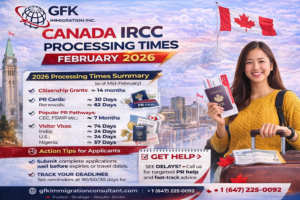
The latest processing-time snapshot from Immigration, Refugees and Citizenship Canada (IRCC) — published 17–19 February 2026 — shows a system under pressure: longer waits for citizenship and some permanent-residence categories, but steady performance for passports and PR card services. This update is based on actual timelines experienced by 80% of applicants, so it reflects real waits rather than optimistic targets.
TL;DR — What changed
- Citizenship grants now take about 14 months (up 1 month). Applicants waiting: ~313,000.
- Permanent residence (economic class): key streams like CEC and FSWP have moved to ~7 months, with growing queues.
- PR cards remain efficient: new PR cards ~62 days; renewals ~30 days.
- Temporary visas (visitor, study, work) vary by country — e.g., visitor visas: India ~74 days, U.S. ~24 days, Nigeria ~57 days. Study and work permits show mixed stability.
What applicants must know
- These are median-style estimates (80% rule). Many individual cases are faster or slower depending on security checks, country, and document quality.
- Expect seasonal surges. February shows a post-holiday surge — more applications were submitted after year-end, increasing queues. Plan for extra time if you apply around busy months.
- Some categories are improving; some aren’t. PR card services are stable (good), but citizenship, family sponsorship (spouses, parents) and humanitarian streams are seeing longer waits.
Actionable steps — what you should do now
- START EARLY: Submit complete applications well before planned travel, job start dates or legal deadlines.
- TRACK YOUR DEADLINES: Put reminders at 90/60/30 days for expiry/renewal dates (work permits, study permits, PR cards).
- PRIORITIZE DOCUMENTS: Missing or low-quality documents cause the biggest delays. Use checklists and certified translations where required.
- RESPOND FAST: If IRCC asks for more info, reply immediately — delays here add weeks or months.
- CONSIDER ALTERNATIVES: If your stream is slow, explore Provincial Nominee Programs (PNPs) or employer-supported pathways (which may offer faster routes).
Country & category notes
- Visitors & tourists: If you’re applying from India or Nigeria, allow 2–3 months for visitor/super visas; U.S. applicants usually see much faster processing.
- Study permits: Typical times vary by country; India ~4 weeks; U.S. ~6 weeks. Apply early, especially before semester start dates.
- Work permits: Expect differences by country and case type. Open or employer-specific permits processed inside Canada can sometimes take longer (monitor IRCC weekly updates).
Quick FAQ
Q: How long is IRCC taking to grant citizenship in Feb 2026?
A: About 14 months on average — one month longer than January 2026.
Q: Are PR cards slow right now?
A: No — new PR cards ~62 days and renewals ~30 days, both stable.
Q: My work permit expires soon. What should I do?
A: Apply to extend 60–90 days before expiry, gather proof of ongoing employment, and ensure biometrics and medicals (if needed) are up to date.
How GFK Immigration Inc. can help
Accurate timelines and fast responses matter. If you’re worried about a pending application, a looming expiry, or how to pivot to a faster pathway (PNP, employer streams, or TR→PR options), our team can:
- Audit your file for missing items
- Draft strong supporting letters and evidence packs
- Suggest strategic stream changes (where eligible)
- Fast-track documentation and liaise with translators/education evaluators
Contact GFK Immigration Inc. for a personalized review and timeline plan.
Phone: +1 (647) 225-0092
Email: gfkimmigrationconsultant@gmail.com
Website: gfkimmigrationconsultant.com
Final takeaway
IRCC’s Feb 2026 processing times underline one clear truth: preparation wins. Know your timeline, submit complete files, and get professional help when the stakes are high. Tracking the weekly/monthly IRCC updates and planning around them is the smartest way to reduce uncertainty and keep your Canada plans on track.