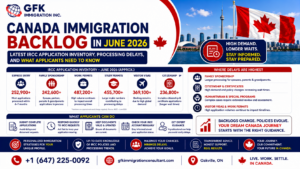
Canada Immigration Backlog in June 2026: Latest IRCC Application Inventory, Processing Delays, and What Applicants Need to Know
Canada’s immigration system continues to process millions of applications each year, but backlogs remain a major concern for many prospective immigrants, temporary residents, permanent residents, and citizenship applicants.
In June 2026, Immigration, Refugees and Citizenship Canada (IRCC) released updated figures showing the current size of its application inventory and backlog. While significant progress has been made compared to previous years, some immigration streams continue to experience processing delays due to high demand and evolving immigration priorities.
At GFK Immigration Inc., we closely monitor IRCC trends and policy updates to help clients make informed decisions about their immigration journey. In this article, we break down the latest backlog data, explain what it means for applicants, and share practical steps to help avoid unnecessary delays.
What Is Canada’s Immigration Backlog?
The immigration backlog refers to applications that have exceeded IRCC’s published service standards for processing.
It is important to understand that not every application in IRCC’s inventory is considered a backlog. Many applications are still being processed within normal timelines.
An application generally becomes part of the backlog when it remains unprocessed beyond the expected service standard established for that specific immigration category.
Canada’s Immigration Inventory in June 2026
According to the latest IRCC data, the department continues to manage a substantial volume of immigration applications across multiple programs.
The inventory includes applications for:
- Express Entry
- Provincial Nominee Programs (PNPs)
- Family Sponsorship
- Work Permits
- Study Permits
- Visitor Visas
- Permanent Residence
- Canadian Citizenship
Despite ongoing efforts to modernize processing systems and improve efficiency, increased demand continues to place pressure on immigration resources.
Recent data suggests that millions of applications remain in various stages of processing, although a significant portion are still within normal service standards.
Which Immigration Programs Have the Largest Delays?
While some immigration streams are performing well, others continue to experience longer processing times.
Family Sponsorship Applications
Family reunification remains a priority for Canada, but some sponsorship streams continue to face elevated processing volumes.
Applicants sponsoring spouses, partners, parents, or grandparents should monitor current processing estimates carefully and ensure all documentation is complete before submission.
Citizenship Applications
Citizenship-related services have experienced growing demand in 2026.
In particular, citizenship certificate applications have seen longer processing times due to increased application volumes and citizenship-by-descent policy developments.
As more individuals seek confirmation of Canadian citizenship status, IRCC continues working through a larger inventory of files.
Humanitarian and Special Immigration Programs
Canada Immigration Backlog in June 2026
Applications submitted under humanitarian and compassionate grounds, as well as certain protected-person categories, continue to face some of the longest processing periods within Canada’s immigration system.
These cases often involve complex assessments that require additional review and verification.
How Is Express Entry Performing?
The good news for skilled workers is that Express Entry remains one of Canada’s most efficient immigration pathways.
Recent processing estimates indicate that most Express Entry permanent residence applications continue to be processed within approximately six to seven months.
Canada’s ongoing use of category-based selection and targeted Express Entry draws has also helped improve inventory management in several priority sectors, including:
- Healthcare
- Education
- Skilled Trades
- French-Language Proficiency
- STEM Occupations
- Transportation
- Agriculture and Food Occupations
For many skilled workers, Express Entry remains one of the fastest routes to permanent residence.
Why Does the Immigration Backlog Matter?
Understanding backlog trends can help applicants set realistic expectations and make better immigration decisions.
Longer Waiting Periods
Applications affected by backlogs may take significantly longer than advertised service standards.
Delayed Travel and Relocation Plans
Work, study, and family reunification plans can be disrupted when applications remain in processing for extended periods.
Increased Anxiety for Applicants
Uncertainty around processing timelines remains one of the biggest concerns among immigration applicants.
Impact on Employers and Educational Institutions
Canadian employers and educational institutions also rely on timely immigration processing to fill labour shortages and welcome international talent.
What Is IRCC Doing to Reduce the Backlog?
IRCC has implemented several measures aimed at improving processing efficiency.
Digital Modernization
The department continues expanding online application systems and automated processing tools.
Workforce Expansion
Additional staffing resources have been allocated to high-demand immigration streams.
Prioritized Processing
IRCC continues prioritizing applications that support Canada’s labour market and economic objectives.
Category-Based Selection
Express Entry category-based draws allow IRCC to target candidates in occupations facing critical shortages.
These initiatives have helped reduce backlogs compared to peak pandemic-era levels, although challenges remain.
How Applicants Can Reduce Processing Delays
Canada Immigration Backlog in June 2026
While applicants cannot control IRCC’s workload, they can take steps to avoid unnecessary delays.
Submit a Complete Application
Missing documents remain one of the leading causes of delays and refusals.
Respond Quickly to IRCC Requests
Monitor your online account regularly and respond promptly to document requests.
Maintain Valid Supporting Documents
Ensure passports, language test results, police certificates, and educational assessments remain valid.
Keep Information Updated
Report changes to marital status, employment, address, or family composition when required.
Seek Professional Guidance
Working with an experienced immigration professional can help identify potential issues before submission.
Frequently Asked Questions
Is Canada’s immigration backlog getting better in 2026?
Overall, IRCC has made progress in reducing inventories compared to previous years. However, some categories continue to experience delays due to high demand and policy changes.
Does being in the backlog mean my application will be refused?
No. A backlog simply means an application has exceeded normal service standards. It does not indicate approval or refusal.
Which immigration program is currently processing the fastest?
Express Entry remains among the fastest permanent residence pathways for eligible skilled workers.
Can I speed up my application?
There is generally no guaranteed way to accelerate standard processing. However, submitting a complete and accurate application can help avoid unnecessary delays.
Should I still apply if processing times are long?
Yes. Waiting to apply may only delay your immigration goals further. Applicants who meet eligibility requirements should focus on submitting strong applications as early as possible.
How GFK Immigration Inc. Can Help
Canada Immigration Backlog in June 2026
Canada’s immigration system is constantly evolving, and navigating application requirements can be challenging.
At GFK Immigration Inc., we help clients with:
- Express Entry applications
- Provincial Nominee Programs (PNPs)
- Work permits
- Study permits
- Visitor visas
- Family sponsorship
- Citizenship applications
- Immigration strategy consultations
Our team stays informed about the latest IRCC policies, processing trends, and backlog developments to help clients make confident decisions.
Final Thoughts
Canada’s immigration backlog remains an important issue in June 2026, but the overall picture is more encouraging than in previous years. While certain programs continue to face delays, IRCC’s modernization efforts and targeted processing strategies are helping improve efficiency across many immigration streams.
For applicants, the best approach is to stay informed, prepare complete applications, respond promptly to requests, and seek professional guidance when necessary.
With proper planning and realistic expectations, applicants can successfully navigate Canada’s immigration system despite ongoing processing challenges.
Need Help With Your Canadian Immigration Application?
GFK Immigration Inc.
📞 +1 (647) 225-0092
🌐 gfkimmigrationconsultant.com
📍 Oakville, Ontario, Canada
Disclaimer
This article is intended for educational and informational purposes only and does not constitute legal or immigration advice. Immigration policies, application inventories, processing times, and service standards may change without notice. Applicants should consult official Government of Canada resources or seek advice from a licensed Canadian immigration professional regarding their individual circumstances.
#CanadaImmigration #IRCC #ExpressEntry #CanadaPR #ImmigrationBacklog #WorkPermitCanada #StudyPermitCanada #CanadianCitizenship #ImmigrateToCanada #PRApplication #ImmigrationNews #CanadaVisa #IRCCUpdates #Canada2026 #GFKImmigration