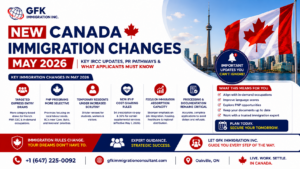
New Canada Immigration Changes in May 2026: Key IRCC Updates, PR Pathways & What Applicants Must Know
Canada’s immigration system continues to evolve rapidly in 2026, and May has introduced several important changes that could directly affect temporary residents, skilled workers, international students, permanent residence applicants, and employers across the country.
From Express Entry priorities and Provincial Nominee Program (PNP) adjustments to healthcare cost-sharing rules and labour market-focused immigration strategies, these updates signal a major shift in how Canada plans to manage immigration moving forward.
At GFK Immigration Inc., we closely monitor every major immigration development to help our clients make informed, strategic decisions. As licensed Canadian immigration professionals, we understand how policy changes can impact your eligibility, timeline, and long-term immigration goals.
Here’s a detailed breakdown of the most important Canada immigration changes in May 2026 and what they mean for you.
Canada Continues Prioritizing Targeted Immigration Selection
One of the clearest trends in 2026 is Canada’s continued move toward targeted immigration selection rather than broad, generalized invitations.
Immigration, Refugees and Citizenship Canada (IRCC) has increasingly focused on selecting candidates who align with Canada’s labour shortages and long-term economic priorities.
Current priority sectors include:
- Healthcare professionals
- Skilled trades workers
- French-speaking candidates
- Construction and infrastructure workers
- Early childhood educators
- STEM and high-demand occupations
This means immigration success in 2026 is becoming more strategy-driven than ever before.
Express Entry Category-Based Draws Continue Expanding
Canada’s Express Entry system continues to prioritize category-based draws in 2026.
Recent invitation rounds show strong preference for:
- French-language proficiency candidates
- Provincial Nominee Program applicants
- Canadian Experience Class candidates
- Occupation-specific selections
French-speaking candidates remain among the biggest beneficiaries, with significantly lower CRS score requirements compared to general draws.
For many applicants, improving French proficiency has become one of the fastest ways to strengthen their pathway to Canadian permanent residence.
Provincial Nominee Programs (PNPs) Becoming More Selective
Several provinces have updated their immigration priorities to address local labour shortages more directly.
British Columbia (BC PNP)
British Columbia recently introduced its new “Care, Build, and Innovate” immigration framework, prioritizing:
- Healthcare workers
- Construction trades professionals
- High-impact economic contributors
The province is now issuing more targeted invitations aligned with labour market needs.
Ontario Immigrant Nominee Program (OINP)
Ontario continues focusing heavily on:
- Skilled workers in high-demand occupations
- International graduates
- Healthcare professionals
- Regional labour shortages
OINP draws in 2026 have shown increased targeting based on specific economic priorities rather than broad occupation categories.
Temporary Residents Facing Increased Scrutiny
Canada is also placing greater emphasis on the management of temporary resident levels.
This includes:
- International students
- Temporary foreign workers
- Visitor visa holders
Federal authorities continue adjusting policies to balance population growth, housing availability, infrastructure capacity, and labour market needs.
Applicants should expect:
- More detailed application reviews
- Increased documentation requirements
- Stronger emphasis on genuine temporary intent where applicable
New Interim Federal Health Program (IFHP) Cost-Sharing Rules
As of May 1, 2026, important changes to the Interim Federal Health Program (IFHP) are now in effect.
Eligible beneficiaries under the IFHP—including refugee claimants and protected persons—must now contribute toward certain healthcare costs.
New rules include:
- $4 co-payment per eligible prescription medication
- 30% cost-sharing for supplemental services such as dental, vision, physiotherapy, counselling, and medical equipment
Basic healthcare services, including hospital and doctor visits, remain fully covered.
This change primarily affects refugee claimants and healthcare providers working within the IFHP system.
Increased Focus on Immigration Absorption Capacity
Canada is placing more emphasis on immigration “absorption capacity,” meaning the country’s ability to successfully integrate newcomers into:
- Employment
- Housing
- Healthcare
- Education
- Community life
This shift explains why immigration programs are increasingly favouring candidates who can integrate quickly into the labour market and regional communities.
It also reinforces Canada’s push toward regional immigration programs outside major urban centres such as Toronto and Vancouver.
IRCC Processing & Backlog Management Remain Key Priorities
Although IRCC continues working to reduce processing backlogs, wait times still vary significantly depending on:
- Immigration category
- Country of application
- Security screening requirements
- Application completeness
Applicants are strongly advised to ensure:
- Accurate documentation
- Complete submissions
- Up-to-date supporting evidence
Even small mistakes can lead to delays or refusals.
What These Immigration Changes Mean for Applicants
The immigration landscape in 2026 is becoming increasingly competitive—but also more predictable for candidates who align with Canada’s priorities.
Applicants Most Likely to Benefit Include:
- Healthcare professionals
- Skilled trades workers
- French-speaking candidates
- Candidates with Canadian work or study experience
- Applicants willing to settle in regional communities
Strategic Immigration Tips for 2026
At GFK Immigration Inc., we recommend applicants take a proactive approach:
1. Improve Language Scores
Higher IELTS or TEF scores can dramatically increase competitiveness.
2. Align with Priority Occupations
Candidates in high-demand sectors have stronger selection opportunities.
3. Explore Provincial Pathways
PNPs continue offering excellent alternatives to federal-only immigration routes.
4. Keep Documentation Updated
Ensure passports, language tests, ECA reports, and employment records remain valid.
5. Seek Professional Guidance
Immigration rules are evolving quickly, and strategic planning matters more than ever.
Frequently Asked Questions
What are the latest Canada immigration changes in May 2026?
Canada has introduced updates involving Express Entry selection, PNP priorities, IFHP healthcare cost-sharing, and targeted immigration strategies focused on labour shortages.
Is Canada still accepting immigrants in 2026?
Yes. Canada continues to welcome immigrants across multiple pathways, but selection is becoming more targeted toward priority occupations and economic needs.
Which immigration programs are strongest in 2026?
Express Entry category-based draws and Provincial Nominee Programs remain among the strongest pathways for skilled workers.
Are CRS scores going down in 2026?
Some targeted categories—especially French-language draws—have seen significantly lower CRS cut-offs compared to general draws.
Expert Guidance from GFK Immigration Inc.
At GFK Immigration Inc., we help individuals and families navigate Canada’s changing immigration system with confidence.
Our services include:
- Express Entry strategy
- Provincial Nominee Program guidance
- Work permits and study permits
- Permanent residence applications
- Refugee and humanitarian pathways
- Immigration profile optimization
As experienced Canadian immigration professionals, we provide personalized guidance tailored to your goals and eligibility.
Final Thoughts
Canada’s immigration system in 2026 is clearly moving toward a more strategic and economically targeted model.
The applicants who succeed will be those who:
- Understand current immigration trends
- Align with labour market priorities
- Build strong, competitive applications
- Adapt quickly to policy changes
If you’re planning to immigrate to Canada, now is the time to position yourself strategically.
Need Help With Your Canada Immigration Journey?
Connect with GFK Immigration Inc. today for trusted immigration guidance.
📞 +1 (647) 225-0092
🌐 GFK Immigration Consultant
📍 Oakville
#CanadaImmigration #IRCC #ExpressEntry #CanadaPR #PermanentResidenceCanada #CanadaVisa #CanadianImmigration #ImmigrateToCanada #PNPCanada #ExpressEntry2026 #WorkInCanada #StudyInCanada #CanadaUpdates #ImmigrationNews #CanadaPR2026 #SkilledWorkerCanada #OINP #BCPNP #IRCCUpdates #CanadaWorkPermit #StudyPermitCanada #NewToCanada #CanadaLife #ImmigrationConsultant #GFKImmigration #OakvilleImmigration #CanadaOpportunities #MoveToCanada #PRPathway #CanadaImmigration2026