Canada’s foreign-worker cuts: what the 2025 changes mean for businesses and workers
Canada’s recent tightening of temporary-worker admissions is already reshaping local labour markets. New federal limits and stricter labour checks have pushed Temporary Foreign Worker Program (TFWP) arrivals to multi-year lows — and businesses that depend on seasonal and low-wage labour are sounding the alarm. Below I explain the numbers, the sectors feeling it most, the human-cost side of relying on exploitable work, and practical next steps for employers and workers.
Quick snapshot: the headline numbers you need to know
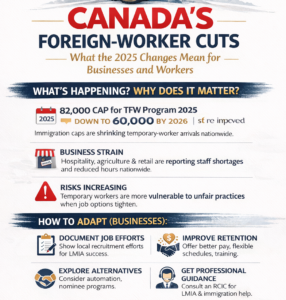
- The government capped TFWP admissions at 82,000 for 2025, but the new Immigration Levels Plan reduces that cap to 60,000 in 2026, and to 50,000 for 2027–2028. These cuts are part of a broader plan to reduce total temporary resident arrivals sharply over the next two years.
- The immediate result: arrivals under temporary programs have plunged. In October 2025 only a few thousand new TFWP workers arrived, and overall temporary admissions in 2025 are tracking well below the original targets.
Why that matters: when quotas fall and LMIA (Labour Market Impact Assessment) scrutiny tightens, employers who previously relied on foreign labour find positions harder — or nearly impossible — to fill quickly.
Who’s being hit hardest?
Hospitality, food service, agriculture, rural retail and some manufacturing segments are most exposed. Small towns and remote communities — which usually lack the local labour pool — feel the cuts acutely. Restaurant owners, seasonal-tourism operators and northern employers have reported reduced hours, shutdowns and staff shortages tied directly to the drop in temporary-worker arrivals.
Example: franchisees in Quebec have warned that without access to temporary workers some outlets may have to reduce hours or close — a pattern echoed by employers from British Columbia to Ontario.
What changed — policy and enforcement
The recent policy shift combines three levers:
- Lower caps on admissions for temporary workers and students as part of the 2026–2028 Immigration Levels Plan.
- Stricter LMIA standards and moratoria on low-wage LMIAs in certain regions; employers now face higher evidentiary burdens to prove no local worker is available.
- Tougher enforcement and higher fines for non-compliant employers — penalties more than doubled in the first half of 2025, and program bans were imposed against repeat offenders.
These measures aim to relieve pressure on housing, public services and wages — the government’s stated priorities — but they also reduce the flexibility of businesses that hire temporary workers to meet short-term demand.
The human side: exploitation, vulnerability and uneven consequences
One of the policy drivers is a desire to curb exploitation. Investigations have revealed patterns of wage theft, illegal cash pay, excessive hours, and intermediary fees that leave temporary workers with pay well below legal or advertised rates. International students and lower-wage TFWs are particularly at risk because precarious permits and informal arrangements discourage reporting abuse.
At the same time, the sudden reduction in legal pathways can push both employers and workers toward informal arrangements that increase exploitation risks, rather than eliminating them. That trade-off — fewer legal arrivals but potentially more underground hiring — is one reason why labour-market reforms are politically and economically fraught.
Is the TFWP displacing Canadian youth?
The short answer: the data and experts point to a mixed picture. Youth unemployment rose significantly in 2025, and political leaders have argued that the program can suppress opportunities for young Canadians. But researchers also show that many temporary jobs are in roles Canadians are less likely to take — seasonal agriculture, demanding food-service shifts and remote-site roles. The policy debate centers on whether the TFWP is a short-term fix that masks structural problems (skills mismatch, regional demographic gaps) or an exploitable shortcut that undercuts wages.
What businesses should do now (practical checklist)
If you run or manage a business that historically relied on temporary workers, consider these immediate steps:
- Audit your workforce needs — separate truly seasonal peaks from steady demand that could justify local recruitment or training.
- Document recruitment efforts carefully to improve LMIA success odds: show ads, interview records, and training plans.
- Invest in retention (better pay, predictable hours, training): hiring locals becomes viable when the job is attractive.
- Explore alternatives: automation for repetitive tasks, partnerships with nearby employers to share staff, or provincial nominee and other immigration routes for longer-term hires.
- Get expert help: quickly consult an immigration professional to understand LMIA strategy, exemptions, or eligible nominee programs for targeted hiring.
These steps won’t fix a sudden staff crunch overnight, but they reduce legal risk and help build a more resilient staffing model.
What temporary workers and students should know
- Documentation matters: keep pay stubs, hours records and point-of-contact information. If you suspect exploitation, confidential advice and reporting routes are available.
- Understand permit limits: some low-wage streams have had their maximum validity shortened — factor this into job choices and long-term planning.
- Seek help early: if your employer isn’t following labour laws, speak with local labour authorities or a regulated immigration professional before your status is jeopardized.
The bigger picture: balancing economic need and domestic priorities
The government frames the cuts as a necessary correction — easing pressure on housing and public services while encouraging employers to hire locally. Critics argue the change comes too fast and risks real economic harm where local labour markets can’t absorb roles immediately. The policy challenge is to tighten the program where it breeds exploitation and wage suppression, while still preserving legal channels for essential labour. That balancing act will shape Canada’s regional economies for years to come.
FAQs
Q: Are these changes permanent?
The 2026–2028 Immigration Levels Plan sets targets for the next three years. Policymakers may revisit the numbers as economic and social conditions evolve. (Immigration News Canada)
Q: Can employers get exemptions for acute regional shortages?
Some regions and sectors can lobby for exemptions or tailored provincial nominee pathways; consult an immigration expert to explore options.
Q: What penalties do non-compliant employers face?
Penalties and enforcement actions have risen, with fines increasing substantially and program bans applied to repeat violators. Ensure compliance or consult counsel.
Bottom line
Canada’s 2025 foreign-worker reductions are a major policy shift with immediate consequences for employers, temporary workers and communities that rely on seasonal labour. The move aims to rebalance pressures on housing and local job markets, but it also creates urgent operational challenges — especially for small businesses and remote employers. Smart employers will respond by documenting recruitment, improving job quality, and pursuing legal hiring alternatives; workers should stay informed and seek help if they face exploitation. If you’re unsure which path fits your situation, consider getting professional advice to navigate LMIAs, provincial programs and compliance obligations.
#CanadaImmigration #CanadianImmigration #ImmigrationNews #IRCCUpdates #ImmigrationPolicy