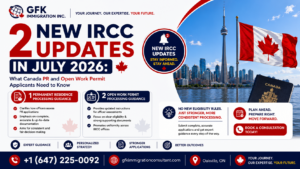
2 New IRCC Updates in July 2026: What Canada PR and Open Work Permit Applicants Need to Know
Immigration, Refugees and Citizenship Canada (IRCC) has introduced two important operational updates in July 2026 that could influence how certain Permanent Residence (PR) and Open Work Permit (OWP) applications are assessed.
While these updates are primarily internal instructions for immigration officers—not new immigration programs or eligibility rules—they provide valuable insight into how applications may be reviewed moving forward.
For prospective immigrants, current applicants, employers, and immigration professionals, understanding these operational changes can help ensure applications are complete, accurate, and aligned with IRCC’s current processing approach.
Quick Overview
The two July 2026 IRCC operational updates relate to:
- Permanent Residence application processing guidance
- Open Work Permit assessment procedures
Although they do not create new eligibility requirements, they clarify how officers should evaluate certain applications to improve consistency across Canada.
Why These Updates Matter
IRCC regularly publishes operational guidance for immigration officers.
These documents help officers:
- interpret immigration legislation consistently
- standardize decision-making
- improve processing efficiency
- reduce administrative errors
- clarify complex application scenarios
While applicants may never directly see these internal instructions, they often influence how immigration files are assessed in practice.
Update 1: Permanent Residence Processing Guidance
2 New IRCC Updates in July 2026
The first operational update provides additional guidance for officers reviewing certain Permanent Residence applications.
Its primary objective is to ensure that immigration officers apply existing regulations consistently while assessing eligibility and supporting documentation.
What this means for applicants
If you’re applying for Canadian Permanent Residence, this reinforces the importance of submitting:
- complete documentation
- accurate employment records
- valid identity documents
- truthful declarations
- up-to-date supporting evidence
Applicants who submit well-prepared applications are generally less likely to experience delays caused by requests for additional information.
Update 2: Open Work Permit Processing
The second operational update focuses on Open Work Permit applications.
Again, this is not a new immigration pathway.
Instead, IRCC has clarified how officers should review certain open work permit files to promote consistent decision-making across processing offices.
Applicants should ensure that:
- eligibility requirements are clearly met
- supporting documents are complete
- application forms are accurate
- all required evidence is submitted before applying
Incomplete applications can still result in delays or refusals regardless of these updated instructions.
No New Eligibility Rules
2 New IRCC Updates in July 2026
One important point for applicants is that these operational bulletins do not introduce new immigration requirements.
There are currently no changes to:
- Express Entry eligibility
- Comprehensive Ranking System (CRS) scoring
- Provincial Nominee Program criteria
- Open Work Permit eligibility
- Permanent Residence qualifying pathways
Instead, the updates focus on how existing rules are interpreted by immigration officers.
Who Should Pay Attention?
These updates are especially relevant for:
Permanent Residence Applicants
Individuals applying through:
- Express Entry
- Provincial Nominee Programs (PNPs)
- Family Sponsorship
- Economic immigration programs
Open Work Permit Applicants
Including eligible applicants under:
- spousal open work permits
- public policy work permits
- bridging open work permits
- employer transition programs
Employers
Canadian employers supporting foreign workers should remain aware of IRCC operational guidance, as processing practices can affect hiring timelines.
Immigration Representatives
Licensed consultants and lawyers should continue monitoring operational bulletins to ensure applications align with current IRCC practices.
Practical Tips for Applicants
To improve your chances of smooth processing:
1. Double-check your application
Review every form carefully before submission.
2. Submit complete documentation
Missing documents remain one of the most common reasons for delays.
3. Keep records organized
Employment letters, passports, educational credentials, police certificates, and language test results should all be current and easy to verify.
4. Monitor IRCC updates
Operational instructions may change as policies evolve.
5. Seek professional guidance
Complex immigration cases often benefit from advice from a licensed immigration professional.
What This Does Not Mean
These July 2026 updates do not mean:
- Canada has introduced a new PR pathway.
- Open Work Permit eligibility has expanded.
- Immigration targets have changed.
- Processing times will automatically become faster.
- Existing applicants need to submit a brand-new application.
Instead, the updates refine IRCC’s internal processing guidance for officers handling applications.
Frequently Asked Questions (FAQs)
Did IRCC introduce a new Permanent Residence program?
No. These July 2026 updates clarify internal processing procedures rather than creating new immigration programs.
Do I need to reapply because of these updates?
No. Existing applicants generally do not need to submit a new application solely because of these operational instructions.
Will processing times improve?
Not necessarily. These updates aim to improve consistency in decision-making, but processing times depend on application volumes, complexity, and available resources.
Who benefits most from these updates?
Applicants who submit complete, accurate, and well-documented applications are best positioned to benefit from consistent processing practices.
Final Thoughts
IRCC’s July 2026 operational updates demonstrate the department’s ongoing effort to improve consistency and efficiency in processing Permanent Residence and Open Work Permit applications.
Although these changes happen behind the scenes, they reinforce an important message for applicants: accuracy, completeness, and proper documentation remain critical to a successful immigration application.
If you’re planning to apply for Canadian permanent residence or an open work permit, staying informed about IRCC’s latest operational guidance can help you avoid unnecessary delays and strengthen your application.
Need Professional Immigration Support?
2 New IRCC Updates in July 2026
Whether you’re applying for Permanent Residence, an Open Work Permit, Express Entry, or a Provincial Nominee Program, GFK Immigration Inc. can help you navigate Canada’s immigration system with confidence.
Contact GFK Immigration Inc. today to discuss your eligibility and build a personalized immigration strategy.
 Phone: +1 (647) 225-0092
 Website: gfkimmigrationconsultant.com
 Location: Oakville, Ontario, Canada
Disclaimer: This article is for educational and informational purposes only and should not be considered legal or immigration advice. IRCC policies, operational guidance, and immigration programs may change over time. Always consult official IRCC resources or a licensed Canadian immigration professional before making immigration decisions.
#CanadaImmigration #IRCC #ExpressEntry #PermanentResidence #OpenWorkPermit #CanadaVisa #ImmigrateToCanada #CanadianImmigration #GFKImmigration #StudyInCanada #WorkInCanada #CanadaPR #ImmigrationConsultant #Canada2026 #ImmigrationUpdates